The Architectural Wonders of Cambria County’s Churches
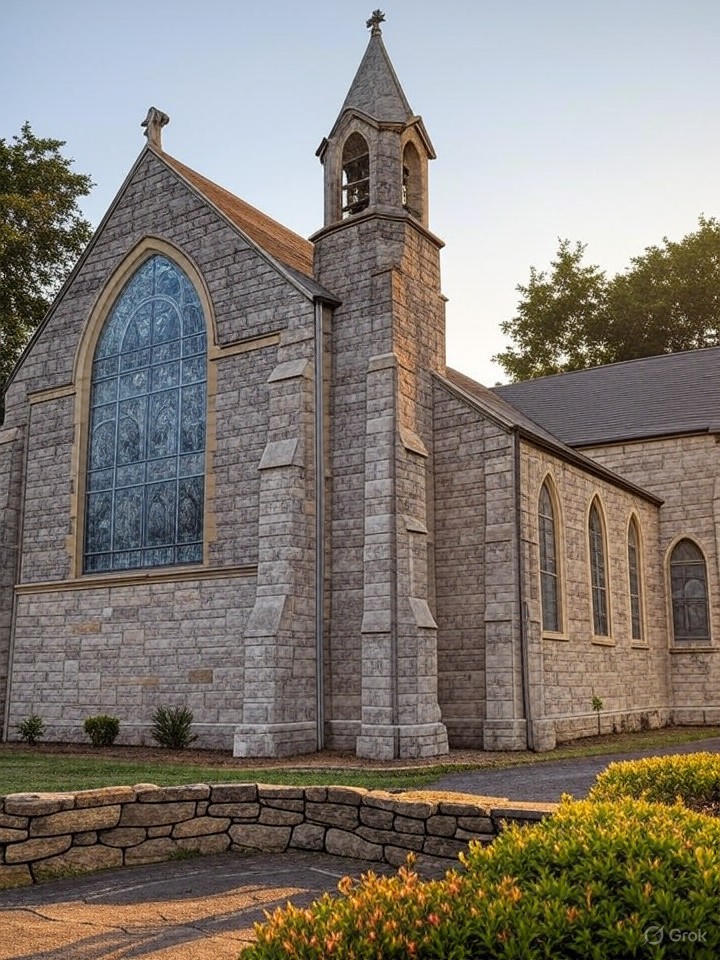
Nestled in the rolling hills of central Pennsylvania, Cambria County is a treasure trove of history and faith, where stunning church architecture stands as a testament to the region's resilient spirit. From Gothic Revival masterpieces to Byzantine-inspired domes, the churches here blend European influences with American ingenuity, often built by immigrant hands in the 19th and early 20th centuries. These structures not only served as spiritual centers for coal miners, steelworkers, and farmers but also as community anchors during tragedies like the 1889 Johnstown Flood. Today, they draw architecture enthusiasts, historians, and pilgrims alike, showcasing intricate stonework, vibrant stained glass, and soaring spires that pierce the Appalachian sky.
Basilica of Saint Michael the Archangel in Loretto
Perched in the quaint borough of Loretto, the Basilica of Saint Michael the Archangel is arguably Cambria County's crowning architectural jewel. Completed in 1851 under the guidance of Father Pamphilus de Liguori, this Gothic Revival basilica features a striking facade of local sandstone, hand-quarried by parishioners. Its twin towers rise 150 feet, framing a magnificent rose window that floods the nave with kaleidoscopic light during services.
Inside, the basilica boasts hand-carved altars from Italy, delicate ribbed vaulting, and frescoes depicting scenes from the life of Saint Michael. Elevated to minor basilica status by Pope Pius XII in 1953, it remains a focal point for the Diocese of Altoona-Johnstown. The surrounding cemetery, with its Celtic crosses, adds to the site's haunting beauty, evoking Ireland's ancient monastic traditions brought by early settlers.
Christ the Saviour Cathedral in Johnstown
In the heart of Johnstown, the Cathedral of Christ the Saviour stands as a beacon of Eastern Orthodox architecture amid the industrial grit. Built in 1904 by Carpatho-Rusyn immigrants, this golden-domed wonder draws from Byzantine and Slavic designs, with five onion domes symbolizing Christ and the four Evangelists. The exterior's red brick and white trim contrast vividly against the Pennsylvania sky, while intricate brickwork and arched windows hint at Russian influences.
Step inside to marvel at the iconostasis—a towering screen of gold-leaf icons—and the chandelier-lit interior painted with biblical murals. Surviving the Johnstown Flood's aftermath and later floods, the cathedral's resilience mirrors its congregants'. Its unique style sets it apart from the county's predominantly Roman Catholic churches, offering a cultural mosaic in stone and gold.
Immaculate Conception Church in Cresson
High on a hill in Cresson overlooks the Basilica of the Immaculate Conception, a Romanesque Revival gem constructed in 1903. Designed by architect William P. Hutchins, its robust granite facade features rounded arches, a massive bell tower, and a portico supported by Corinthian columns. The church's interior impresses with a barrel-vaulted ceiling, marble altars, and Tiffany stained-glass windows depicting Marian apparitions.
Cresson's cool climate made it a summer retreat for Pittsburgh's elite, and the church served as their spiritual haven. Today, it's part of the Prince of Peace Parish, blending worship with architectural tourism. The adjacent Lourdes Grotto replica adds a layer of devotion, drawing visitors for its peaceful serenity.
St. Mary's Assumption Church in Ebensburg
Ebensburg, the county seat, hosts St. Mary's Assumption Church, a Victorian Gothic structure rebuilt after a 1906 fire. Its asymmetric spire, pointed arches, and tracery windows exemplify High Victorian Gothic style. Local bluestone construction ensures durability, while the interior's hammer-beam roof and ornate reredos showcase craftsmanship from the Titus Brothers of Pittsburgh.
As one of Cambria's oldest parishes (founded 1797), St. Mary's embodies the Irish Catholic heritage of the area. Its annual festivals and preserved pipe organ make it a living museum of faith and design.
A Tapestry of Styles and Stories
Cambria County's churches reflect a symphony of styles—Gothic, Romanesque, Byzantine—fueled by waves of European immigrants. Many incorporate local materials like Cambria freestone, creating enduring monuments. These sites also tell stories of survival: post-flood rebuilds in Johnstown fortified structures with steel reinforcements, blending old-world beauty with modern resilience.
Preservation efforts by groups like the Cambria County Historical Society ensure these wonders endure. Whether hiking to Loretto's basilica or touring Johnstown's domes, visitors find inspiration in their intricate details and sacred atmospheres.
In an age of fleeting trends, Cambria County's churches remind us of timeless beauty forged in faith and stone.
Further Reading and Resources
- Get More at Cambria Buzz
- Diocese of Altoona-Johnstown Official Website
- Basilica of Saint Michael, Loretto
- Cathedral of Christ the Saviour, Johnstown
- Visit Johnstown: Historic Churches
- Cambria County Tourism: Architectural Highlights