Reiki and Menopause
Introduction
Menopause marks a significant transition in a woman's life, typically occurring between ages 45 and 55, when menstrual cycles cease due to declining ovarian function. This phase brings a host of symptoms, including hot flashes, night sweats, mood swings, insomnia, fatigue, joint pain, and vaginal dryness. While hormone replacement therapy (HRT) and medications offer relief for some, many women seek complementary therapies to manage symptoms holistically without side effects.
Enter Reiki, a Japanese energy healing practice that has gained popularity worldwide for its gentle, non-invasive approach. Reiki involves channeling universal life energy through the practitioner's hands to promote balance and self-healing. For menopausal women, Reiki offers potential relief from stress-related symptoms, improved sleep, and emotional stability. This article explores how Reiki can complement conventional treatments, supported by anecdotal evidence, preliminary studies, and expert insights.
Understanding Menopause Symptoms
Menopause symptoms stem from hormonal fluctuations, particularly drops in estrogen and progesterone. Common challenges include:
- Vasomotor symptoms: Hot flashes and night sweats affect up to 80% of women, disrupting daily life and sleep.
- Mood and cognitive issues: Anxiety, depression, irritability, and brain fog.
- Physical discomfort: Fatigue, muscle aches, headaches, and weight gain.
- Sleep disturbances: Insomnia linked to night sweats and stress.
- Sexual health: Reduced libido and vaginal dryness.
These symptoms can last from a few months to over a decade, impacting quality of life. While lifestyle changes like diet, exercise, and mindfulness help, many turn to Reiki for its calming effects on the body's energy systems.
What is Reiki?
Developed in the early 20th century by Mikao Usui in Japan, Reiki (meaning "universal life energy") is a form of biofield therapy. Practitioners are attuned through training levels, enabling them to act as conduits for ki (life force energy), similar to qi in Traditional Chinese Medicine or prana in yoga.
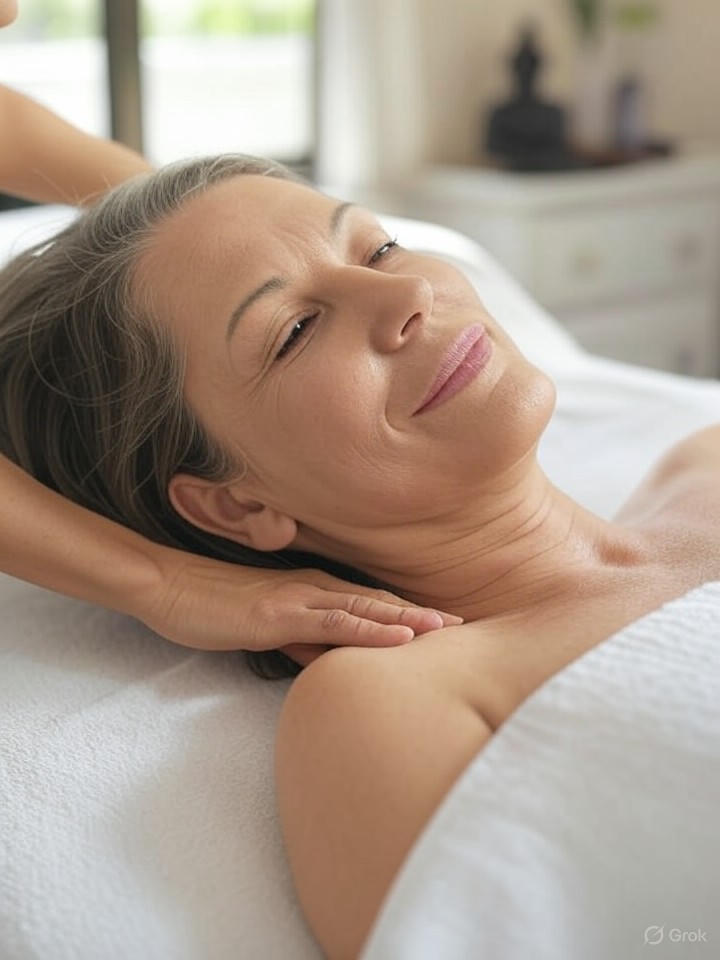
A typical session lasts 45-90 minutes. The client lies fully clothed on a table while the practitioner places hands lightly on or above key energy centers (chakras), scanning for blockages. No physical manipulation occurs—it's purely energetic. Self-Reiki techniques allow daily practice at home.
Reiki is not a religion or belief system; it's accessible to all and focuses on relaxation, which triggers the parasympathetic nervous system for healing.
How Reiki Helps with Menopause Symptoms
Reiki's benefits for menopause are primarily through stress reduction, as chronic stress exacerbates hormonal imbalances. Here's how it addresses key symptoms:
Reducing Hot Flashes and Night Sweats
Hot flashes result from the hypothalamus misregulating body temperature due to estrogen decline. Reiki's calming effect may stabilize the nervous system. A 2017 study in the Journal of Alternative and Complementary Medicine found Reiki reduced hot flash frequency and severity in breast cancer survivors (many post-menopausal). Participants reported fewer episodes after eight weeks of sessions.
Improving Sleep and Reducing Fatigue
Insomnia plagues 40-60% of menopausal women. Reiki promotes deep relaxation, akin to meditation. Research from the National Center for Complementary and Integrative Health (NCCIH) shows Reiki improves sleep quality in various populations. Women practicing self-Reiki on the solar plexus chakra (for digestion and energy) often report waking refreshed.
Balancing Mood and Emotions
Mood swings link to serotonin fluctuations. Reiki on the heart and third-eye chakras fosters emotional release. A pilot study in Menopause journal (2014) noted reduced anxiety and depression scores in perimenopausal women after Reiki. Anecdotally, clients describe feeling "lighter" and more resilient.
Easing Physical Pain
Joint pain and headaches respond to Reiki's anti-inflammatory energy flow. A 2020 review in Complementary Therapies in Clinical Practice highlighted pain reduction in chronic conditions, applicable to menopausal aches.
Supporting Hormonal Balance
While not directly altering hormones, Reiki may enhance endocrine function indirectly via the hypothalamic-pituitary-adrenal axis. Practitioners often target the sacral and root chakras for reproductive health.
Overall, a 2019 systematic review in the Journal of Evidence-Based Integrative Medicine concluded Reiki is safe and effective for symptom management in women’s health, with effect sizes comparable to mindfulness.
Incorporating Reiki into Your Menopause Routine
Professional Sessions
Seek certified practitioners via the International Association of Reiki Professionals (IAREP). Start with weekly 60-minute sessions, costing $50-150. Combine with acupuncture or yoga for synergy.
Self-Reiki Practice
Learn Level 1 Reiki (online or in-person courses, $100-300). Daily 10-20 minute routines:
1. Sit comfortably, hands on eyes/heart/sacrum.
2. Visualize soothing light flowing through your body.
3. Affirmations: "I am balanced and at peace."
Apps like Insight Timer offer guided Reiki meditations.
Integration Tips
- Pair with black cohosh or evening primrose oil (consult a doctor).
- Track symptoms in a journal.
- Use during hot flashes: Hands on forehead and nape.
Safety and Considerations
Reiki is low-risk, with no known contraindications. The NCCIH rates it as safe. However:
- It's complementary, not a replacement for medical care.
- Consult physicians if symptoms are severe (e.g., heavy bleeding).
- Pregnant or skeptical individuals may need reassurance—Reiki works regardless of belief.
Skeptics note placebo effects, but brain imaging studies show Reiki activates relaxation brain regions similarly to real interventions.
Conclusion
Reiki offers menopausal women a empowering, side-effect-free tool for reclaiming vitality. By addressing the mind-body connection, it eases the transition into this life stage. Many report profound shifts after consistent practice. Consult healthcare providers, explore local practitioners, and embrace this gentle path to wellness.
Resources and Links
- National Center for Complementary and Integrative Health (NCCIH) on Reiki: https://www.nccih.nih.gov/health/reiki
- International Association of Reiki Professionals: https://iarp.org/
- Study on Reiki for hot flashes: https://pubmed.ncbi.nlm.nih.gov/28287331/
- Menopause Society: https://menopause.org/
- Reiki self-practice guide: https://www.reiki.org/articles/reiki-self-treatment
- Journal review on Reiki in women's health: https://pubmed.ncbi.nlm.nih.gov/31434022/